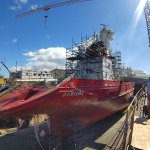
Pilot training on dry-dock operations for biofouling management
June 4, 2024 2:46 pmThis is the third training course developed under the project, the latest one focusing on dry-dock operations for biofouling management.


This is the third training course developed under the project, the latest one focusing on dry-dock operations for biofouling management.
The GloFouling project has expanded its outreach by welcoming Panama as one of its beneficiary countries from the Central and South America
The aftermath of the coronavirus pandemic has triggered a series of policy measures across the world aimed at stimulating national economies to bring them up to speed and reactivate livelihoods. Much of this economic recovery is expected to tap into natural resources provided by our oceans and explore how to increase the contribution of their ecosystem services – the much-touted Blue Economy.The essential role played by biodiversity faces challenges such as climate change, pollution and habitat
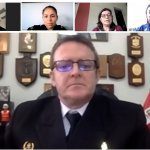
The Dirección General de Capitanías y Guardacostas (DICAPI) and the Instituto del Mar del Perú (IMARPE) has jointly organized a workshop on 14 July 2020 to kick start Peru’s participation in the GloFouling Partnerships project.Peru's maritime geography includes mangroves, wetlands, macroalgae meadows, rocky coasts, soft bottoms and beaches of great biological diversity with a significant degree of endemism. These ecosystems have supported or facilitated port activities, tourism, aquaculture and
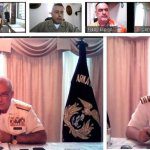
DIRNEA have taken on the challenge to lead and organize first National workshop and Task Force meeting virtually, when travel and face to face meetings are forbidden.
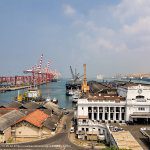
The GEF-UNDP-IMO GloFouling Partnerships participated in Sri Lanka National Workshop and National Task Force meeting hosted by the Sri Lanka Marine Environment Protection Authority (MEPA), held in Colombo on 25-27 February 2020. This meeting kicked off national activities in Sri Lanka as part of the project.
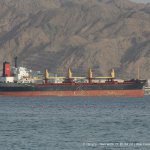
Jordan completes National Workshop to raise awareness on impact of invasive aquatic species. Participants agreed on the establishment of the National Task Force and agreed on the next steps.
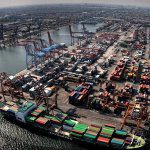
The GloFouling Partnerships continues to build up institutional arrangements to deal with the issue of invasive aquatic species transferred through marine biofouling. Indonesia was the latest country to discuss the needs for the development of a national strategy during a recent workshop meeting. The Directorate General for Sea and Transportation organised the workshop from 28 to 29 October in Jakarta. The event included participation from a wide range of stakeholders, particularly universities
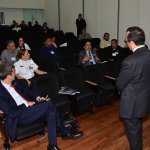
The maritime authority of Mexico (Secretaria de Marina – SEMAR), organised the first national workshop in Ciudad de Mexico, from 17 to 18 October, with the aim of presenting the GloFouling project and bringing together the maximum number of stakeholders that will be part of a National task force. The event was launched by Vice Admiral Ruben Ceballos Guevara, Head of UNICAPAM (Unidad de Capitanias de Puerto y Asuntos Maritimos), who highlighted the strong commitment of Mexico to protect its mar
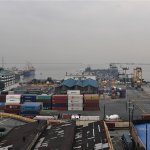
The risk to marine biodiversity posed by invasive aquatic species needs to be addressed globally. The growing focus on the Blue Economy makes this even more important, as invasive species can have negative impacts on a wide range of resources and economic sectors. In the Philippines, a study published in 2017 estimated that the coastal and marine environment contributed over 6 billion dollars to the national economy every year. Aiming to raise awareness on the negative effects of invasive spec