From early pilot to flagship collaboration
The GIA model was first piloted under the GEF-UNDP-IMO GloBallast Partnerships Project, addressing invasive aquatic species introduced via ships’ ballast water. Building on that success, a second GIA was launched under the GEF-UNDP-IMO GLoMEEP project to tackle greenhouse gas (GHG) emissions from ships, bringing together stakeholders to promote energy-efficient technologies and practices. In 2020, a third GIA was established under the GEF-UNDP-IMO GloFouling Partnerships Project: the Global Industry Alliance for Marine Biosafety. This newest GIA focuses on ships’ biofouling management – a major vector for the spread of invasive aquatic species via ships’ hulls and niche areas. In doing so, not only it contributes to the protection of marine biodiversity, but also promotes fuel efficiency and reductions in GHG emissions, demonstrating the interconnectedness of environmental issues and the role of industry collaboration in addressing them.
Shipping is a critical enabler of global trade, but it also plays a central role in the spread of invasive aquatic species through biofouling on hulls and niche areas of the ship. These organisms can drastically alter marine ecosystems, outcompete native species, and cause substantial economic and ecological damage. Recognizing this, the IMO adopted Biofouling Guidelines in 2011, updated in 2023, and in April 2025 agreed to initiate the development of a binding international convention on biofouling management.
A dedicated platform for collaboration and innovation
To ensure the proactive engagement of the shipping industry in implementing best biofouling management practices, the GIA for Marine Biosafety was launched as a dedicated platform for collaboration and innovation.
The GIA for Marine Biosafety exemplifies how the UN can effectively partner with industry to drive meaningful action. Its model is designed for efficiency, inclusiveness, and results:
- 15 active members in 2025 from across the maritime sector, including shipping companies, paint manufacturers, ports, and technology developers;
- A Task Force steering committee that defines the strategic direction, activities, workplans, and financial allocations;
- A blend of cash and in-kind contributions with cash contributions since the GIA’s inception in 2020 exceeding USD 1 million. Funds are administered transparently by IMO;
- A dedicated secretariat provided by the GloFouling Partnerships project team, offering operational continuity at no extra cost to members.
With its lean structure and flexible membership (limited to private companies), the GIA encourages industry active participation and contribution to global efforts toward ocean governance.
Concrete results
Since its establishment, the GIA on Marine Biosafety has achieved a wide range of concrete results, in support of the goals of the GloFouling Partnerships project, IMO priorities as well as UN-wide targets for ocean protection:
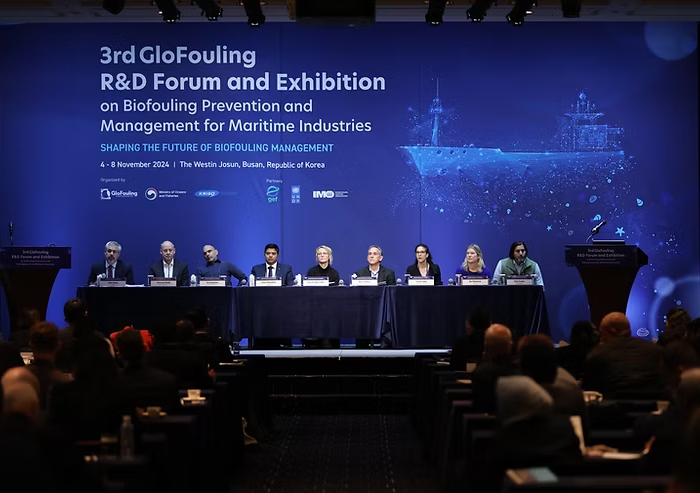
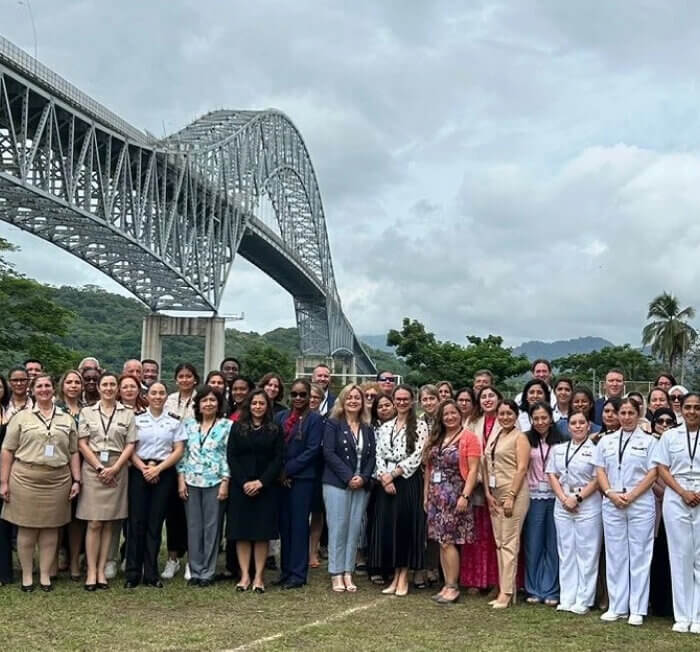
- Technology demonstration projects in Panama and the Republic of Korea (2024), introducing cutting-edge tools for in-water cleaning, dry-dock operations, and hull inspection;
- Scientific and policy contributions, including studies on biofouling’s impact on GHG emissions and the regulatory landscape, submitted to IMO’s MEPC and PPR sub-committees;
- Awareness raising through participation in regional and global platforms, such as the UNFCCC COP26, the GEF Assembly in Vancouver in 2023, and the upcoming UN Ocean Conference in Nice (2025);
- Educational content, including animated videos and a documentary released in 2025, explaining how effective biofouling management contributes to both marine biosafety and climate action.
These initiatives reflect the GIA’s cross-sectoral approach – bridging scientific research, policy support, technology implementation, and public awareness.
Key features
The GIA for Marine Biosafety provides a tested and transferrable model for other UN–industry collaborations. Its success rests on key features:
- Alignment with international regulatory processes, ensuring that outputs are timely, relevant, and used by stakeholders;
- Industry ownership, with financial and technical investment from members driving both commitment and innovation;
- Issue-focused and manageable size, allowing for inclusive participation and agile decision-making;
- UN stewardship, ensuring neutrality, transparency, and accountability:
- Stewardship: IMO, as a specialized agency of the UN, acts as the convener, coordinator, and administrator of the GIA. It provides institutional support, legitimacy, and oversight.
- Neutrality: The IMO ensures that the GIA operates without favoring any specific company, country, or commercial interest. This neutrality is essential for building trust among diverse industry stakeholders.
- Transparency: All financial contributions (cash or in-kind), decisions, and outputs are documented, traceable, and public, shared openly with members and relevant governing bodies (like IMO committees), ensuring that stakeholders know how GIA resources are being used and why.
- Accountability: The GIA’s actions and expenditures are subject to IMO’s internal control systems, and members are accountable for delivering on commitments. Decisions are made collectively through the GIA Task Force, ensuring no single party can unilaterally drive the agenda.
The IMO-GIA partnership is not only delivering tangible environmental and climate benefits, it is also defining positively the way the UN engages with industry in advancing sustainable development.